
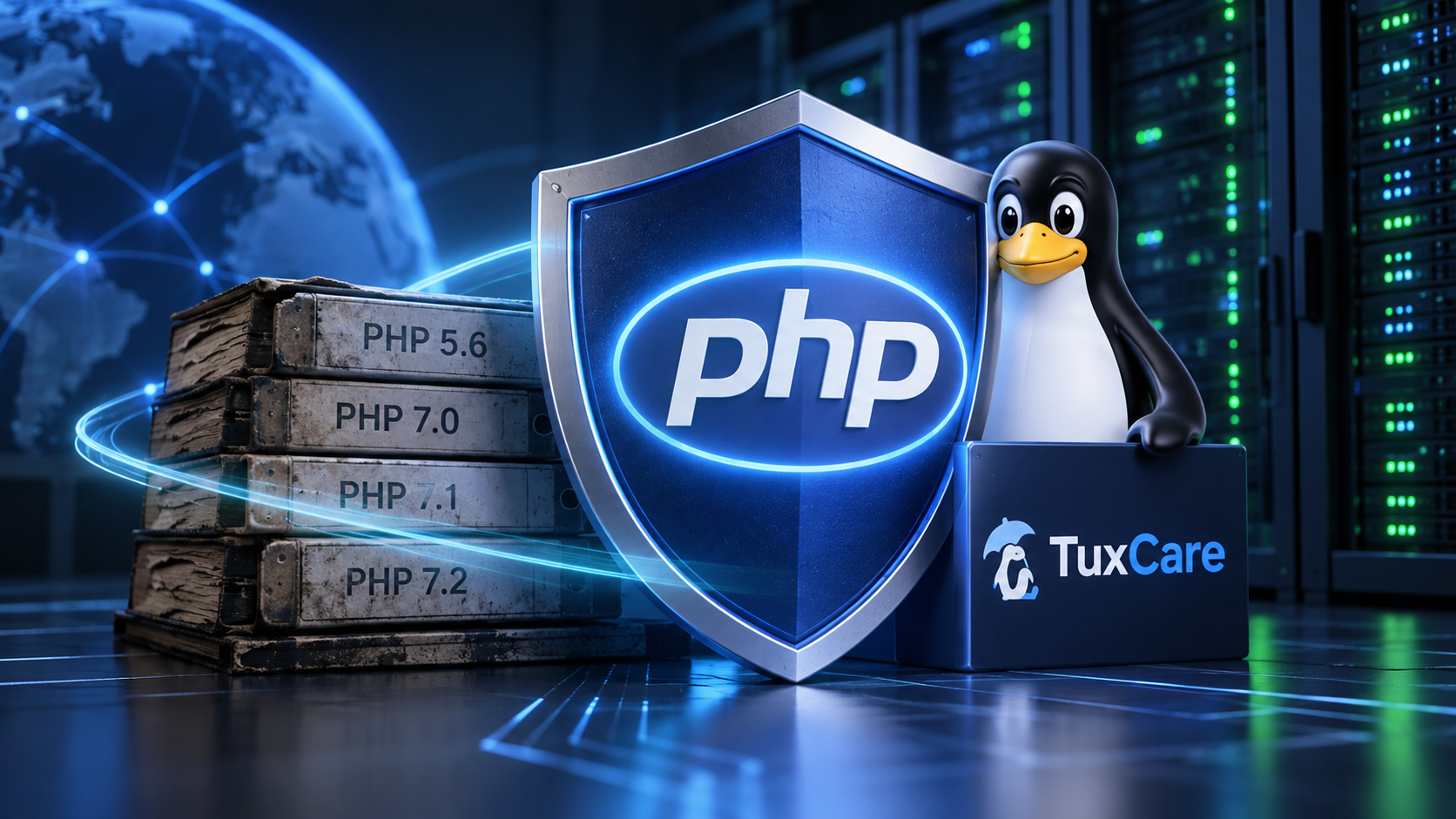
Regular PHP updates are essential for the security of any web project. An older website may run for years without visible errors. However, that does not mean its PHP environment is still secure. Therefore, PHP should be updated together with the operating system, CMS, and dependencies.
Every PHP branch has a limited lifecycle. First, it receives bug fixes and security updates. Then support becomes more limited. Finally, the version reaches End of Life (EOL), and official security fixes stop.
Why outdated PHP is risky
After EOL, newly discovered vulnerabilities in that PHP version are no longer fixed by the PHP project. At the same time, the website may continue to work normally. As a result, the risk can remain hidden until a real incident occurs.
In addition, known vulnerabilities become easier to exploit over time. This matters especially for online stores, CRM systems, and corporate platforms. These projects handle authentication, personal data, and sometimes payment-related information.
Therefore, PHP updates should be part of routine website maintenance. They are not only about getting new features.
What if PHP cannot be upgraded?
In practice, moving to a newer PHP release is not always simple. For example, an older project may depend on an outdated CMS, libraries, or custom modules. In addition, large amounts of legacy code may require separate testing.
In that situation, a rushed migration can create new problems. However, leaving an unsupported PHP version without security fixes is also risky.
This is where extended lifecycle support becomes useful. One example is TuxCare Endless Lifecycle Support for PHP (ELS for PHP). It provides security fixes for selected PHP versions after their official support has ended.
As a result, an application can continue running on the PHP version it requires. At the same time, the PHP runtime can still receive fixes for discovered vulnerabilities.
There is one important limitation. TuxCare ELS does not fix vulnerabilities in your own legacy application code. It protects the supported PHP runtime. Therefore, ELS gives you more time for modernization, but it does not replace it.
How we use it on our servers
Our hosting servers use TuxCare ELS for PHP. We pay a separate license for each hosting user.
Because of this, we can host older projects that still require EOL PHP versions. Meanwhile, the PHP environment can continue receiving available security fixes.
This is especially useful for legacy websites. For example, a project may depend on an old CMS or an incompatible module. In that case, it does not have to be rewritten immediately just to change the PHP version.
However, we still recommend planning a migration. ELS extends the secure lifecycle of the environment, but it should not become a permanent substitute for upgrading.
What we recommend
- Use a supported PHP version whenever possible.
- Install security updates regularly.
- Test compatibility with new PHP releases in advance.
- Update the CMS, frameworks, libraries, and dependencies.
- Use ELS as temporary protection for legacy projects.
- Plan a controlled migration to a current PHP release.
In short, an old website does not have to remain unprotected. If immediate PHP updates would require major redevelopment, TuxCare ELS can reduce infrastructure risk. Then the migration can be completed in a controlled and predictable way.
Обсуждение
0 комментариев
Комментариев пока нет.
Добавить комментарий
Чтобы оставить комментарий, войдите в аккаунт или зарегистрируйтесь.